Wednesday, June 15, 2011

My Faith Journey

View Image
A statue on Notre Dame campus
with the inscription, Venite Ad Me Omnes 
("Come to Me All")

My friend, Mary, has asked me to contribute a chapter to her book about people who have emerged through a crisis of faith with a changed and stronger faith, and the following is the first draft. I would welcome any suggestions on how to make it better.

At first I wasn't sure if what I experienced was a true crisis of faith in the way that others have experienced it, because I never felt abandoned by God for very long. When, at my lowest point, the thought, Maybe God does not exist, began to form in my mind, it was countered by the words of Job in Handel’s Messiah through the car stereo: “I know that my Redeemer liveth.” God was closer to me than ever—hovering over the chaos.

So in that sense my crisis was very different from those who eventually abandon their faith. But in other ways I suspect that it was similar: My crisis shook the very foundation of my faith, which had to be rebuilt brick by brick into something more solid. I came to a point where platitudes wouldn’t sustain me—I had to know that it was true. My faith could no longer be like a fragile object stored in a glass cabinet. It had to be taken out and tested at the risk of its destruction.

I faced the crossroad that permits no shrinking back into one’s comfort zone, which leads either to a stronger, deeper faith or its abandonment. Mary’s book is from the perspective of those who end up taking the former path, as described by George MacDonald in words that comforted me during that phase of my life:

"A man may be haunted with doubts, and only grow thereby in faith. Doubts are the messengers of the Living One to the honest. They are the first knock at our door of things that are not yet, but have to be, understood . . . Doubt must precede every deeper assurance; for uncertainties are what we first see when we look into a region hitherto unknown, unexplored, unannexed."


My Faith Prior to the Crisis

My faith background is fairly eclectic. I was baptized into the Norwegian Lutheran State Church, of which one of my only memories is being stuck in the annual going-to-church-on-Christmas-Eve traffic for about an hour, when the entire community tried to cram into a relatively small traditional church. My other memory was of going to the same church on a school field trip in fourth grade and being shocked when a Pakistani boy in my class announced before the field trip that he didn't believe in our God. That was my first experience of anyone believing anything different from what the state church taught. 

After moving to the U.S. when I was eleven, our family started attending the Norwegian Lutheran Memorial Church in Minneapolis, where I went through confirmation. Then I attended St. Olaf College, once again (you guessed it) a Norwegian Lutheran institution. 

Things started to change at the age of nineteen, when I came to Christ in a Charismatic church while visiting my aunt in Florida for spring break (such a rebel, I know). My senior year, I met my husband Rick, who also had a Lutheran background, but to his father's dismay I corrupted Rick into leaving the Lutheran Church, and we attended an evangelical church after we married. Then we enrolled at Notre Dame Law School, a Roman Catholic institution, where we found an evangelical church in South Bend. 

Already at this point, I had experienced the gentle stretching of my faith that I think helped me through my coming crisis. Rick was a more critically-thinking Christian than I was at the time, so he challenged my myopia. And I knew that there were genuine Christians outside of my narrow sphere of modern evangelicalism, like our Contracts Professor Edward Murphy, a deeply spiritual Catholic Christian who authored the book Life to the Full, and who sadly succumbed to cancer a few years after we left Notre Dame.

But I still had that sense that I was the center of all rightness and to the extent people said what was familiar to me, they were also right. And the further they were from that center, the more wrong they were. I never asked myself why I should be so right—I simply equated familiarity with truth. 


The Day that Changed Everything

Ingrid at four months
Our first two children, Chelsea and Ingrid, were born during the three years I was in law school. It may not seem like the brightest idea to have babies in law school, but this was, after all, Notre Dame, where people often had children numbering in the double digits—and when in Rome . . . (Sorry—I didn’t even notice the pun until after I wrote it.) 

But God prepared me for what lay ahead by showing me that I could do all things through Him who strengthens me, including juggling babies and my studies. I had a rough semester that started a month after Chelsea's birth, when I was in a sleep-deprived stupor every day. After that semester, I concluded that the only way I would make it through law school with decent grades was if I started every day with an hour of focused Bible reading and prayer. After that, my grades became better than before I had children, and when May 12, 1993 rolled around, I had just completed my best semester in all my years of schooling and was awaiting graduation.


Ingrid was released from the
hospital, but very sedated, for
my graduation.
(Rick graduated the year before.)
That was the day when Ingrid, at five months old, had her first seizure. I was feeding her at the time, and my first thought was that she was choking on the milk because she stopped breathing and turned blue. But I had seen a seizure before while working with the mentally disabled, and in my haste to call for medical assistance I yanked the phone cord out of the wall and couldn't keep my hands from shaking as I tried to plug it back in. But my fears at the time did not come close to doing justice to the reality we faced. 

Ingrid was in and out of hospitals in Indiana, Illinois, and Minnesota over the next three months, while doctors tried in vain to stop the seizures that came every few minutes. At one point, she developed pneumonia because she was so heavily drugged that she could hardly swallow. She stopped crying and smiling, and her right hand became fisted and unusable from the seizures. 

I spent most of those three months just praying—praying while sitting in the hospital, praying at night, reading the Bible and devouring books on prayer. I had experienced God's faithfulness many times before and knew the power of prayer, so I would have faith and I wouldn't stop praying until she was healed—even if it killed me. I would permit no doubt in my mind and no grief in my heart. 

I remember one night toward the end of the three months while Ingrid was at a hospital in St. Paul, the premier hospital for epilepsy care in the Midwest, and we were staying with my parents in Minneapolis. I was up praying in the middle of the night, as usual. Rick found me and said, "Let's say a three-year-old is helping her father do something that only the father can do. It is okay for the three-year-old to take a break and get some sleep. You're the three-year-old in this scenario and God is the father, so why don't you come to bed?"

I thought that was a quaint analogy, but what kind of mother would I be if I let my eight-month-old suffer while I slept? So I stayed awake and continued to pray. I was convinced that by the time we exhausted all natural remedies, God would intervene and heal Ingrid. 

After three weeks at the St. Paul hospital, the doctors had concluded that Ingrid was not a candidate for surgery, and the experimental drugs had not helped her. But she had apparently overstayed her visit, because they told us that she would be discharged, without anywhere else to go. "We think that Ingrid is doing much better, and is ready to go home. She only has about seven seizures per day now."

"But that's because you give her Ativan after three seizures, which knocks her out after about seven seizures for the rest of the day," I said.

"No, we think she is doing better even without the Ativan."

"Let's test that then and wait to give her Ativan," I suggested.  

"Okay, but we still have to get the discharge papers ready. Most epilepsy patients stay for a maximum of two weeks, and Ingrid has been here for three now." So they knew as well as I did that Ingrid had not improved at all on the experimental medicine. But they were not willing to tell us that there was nothing else they could do. 

While we waited for the discharge papers, Ingrid had over twenty seizures, just as I had suspected. Then the Ativan stopped them by once again putting her into a deep sleep. I was exhausted and my conviction that Ingrid would be healed was gone and replaced with overwhelming dread and tension. I had not cried since my graduation week, when Ingrid was first hospitalized. But I cried the whole time we waited for the papers and during the entire drive back to my parents' house. 

Rick recalls holding Ingrid and praying for her later that night. Her tiny body convulsed with one seizure after the other, every minute or two, and he thought to himself, I'm holding my daughter as she dies.

The next day we started driving back to Illinois, where we were living at the time. Darkness hung like heavy curtains around me, and I started experiencing almost unbearable panic attacks. No longer was I only concerned about Ingrid, but I began to fear for myself as well for having driven myself so hard at a time when I needed to grieve and heal. I had made the leap of faith headlong into the abyss, and now I wondered if anyone was there to catch me, or if I had leapt to my doom.  

Then the song came over the car speakers: "I know that my Redeemer liveth. And that He shall stand at the latter day upon the earth. And though worms destroy this body, yet in my flesh shall I see God."

Job's bold pronouncement of faith in God and the resurrection kindled a small spark of faith within me. I didn't have great faith, in spite of my mental gymnastics and my frantic, all-consuming prayers, because when Ingrid wasn't miraculously healed in the way I had hoped, my immediate reaction was, I knew it. 

But I still had a little faith—enough to do the one thing that faith demands of us: come to Christ. "Come to Me, all who are weary and heavy-laden, and I will give you rest" (Matthew 11:28).

So I clung to Him like never before, releasing everything into His hand—Ingrid, my precarious mental state, and my faltering faith. For the first time, I came without asking for anything except His presence. I surrendered everything at His altar. And I decided that instead of trying to control God, I would listen to Him and let Him lead me.

Over the next two weeks, I continued to struggle with panic attacks and waves of depression, and I felt very strongly that God commanded me to cut out all caffeine, alcohol, and refined sugar from my diet (which I later learned can make panic attacks worse). I started jogging, making a practice of thanking God for every blessing, releasing all my anxieties to Him, and resting in His presence moment by moment.

God's light spilled into my life, more powerful than ever, filling me with a joy and peace that I had never before experienced. The darkness fled at His presence, and the panic attacks disappeared and never came back. 

During this two-week period, Ingrid continued to have seizures that we had to stop with Ativan, which would put her into a deep sleep for the rest of the day. But we knew that Ativan was not a permanent solution, because it stops working for seizures after a couple of weeks of daily use. So at the end of the two weeks, her seizures started coming every few minutes even when we gave her Ativan, and we had her admitted to the intensive care unit of the local hospital.

I thought the poor ICU doctor would have nervous breakdown, because he had inherited this problem from the specialists in St. Paul, and there was nothing he could do. He had long phone conversations with them, and finally he told us that the specialists had recommended that we try combining the experimental medicine (Felbatol) with Phenobarbital, rather than Tegretol. I don't think anyone thought this would help, since we had tried just about every combination of every anticonvulsant available. 

But the seizures stopped. For two weeks, Ingrid did not have a single seizure. Then she started having a few, several times a week, but we were out of crisis mode and were able to sign her up for rehabilitative therapy and early intervention programs. 

That was not the solution I had envisioned, and Ingrid's disabilities continued to be challenging, but the pressures I faced made me look to God, who had a lot to teach me. Some say that God's ways are inscrutable, but I say that He's eager to instruct, even though the human mind can only very slowly process the truths that He has revealed. We can't wait for answers to every why before we believe, because only when we live by faith, by looking to Christ, does the puzzle begin to take shape.  


Where I am Today

Back when Ingrid was first admitted to the hospital in St. Paul, we met with a hospital social worker who wanted to see how we were holding up. I made a point of giving all the "right" answers and demonstrating what a great attitude I had. I thought for sure I had succeeded, because she smiled and nodded a lot, so obviously she was quite impressed. 

But in her report, she said that I was in denial and really needed a good support network. I was somewhat offended by this at the time, but she was 100% correct in what she said about me. 

That is one way in which I am different today. In the aftermath of the crisis, I learned how important it is to face all truth—about myself, the world around me, and the Bible. "Behold, You desire truth in the innermost being, and in the hidden part You will make me know wisdom" (Psalm 51:6). I have come to see that truth is the building block of genuine faith. Only when I resolve to build my foundation of faith with solid materials will it sustain me during a crisis. And this means testing everything to make sure it's true.

I have also become more faithful to the Bible, which some may claim is inconsistent with the desire for truth. But no such inconsistency exists. I have found that the more I seek the truth, the more I see that it lines up perfectly with the teachings of the Bible, and the stronger my faith becomes. In the beginning, it felt threatening to me to seek the truth because I risked finding that what I believed was false. And much of what I believed was false because I had plenty of blind spots. But I have always found the Bible to be true. 

Another question raised by my story is whether I still believe in modern day miracles, and the answer is an emphatic "yes." I believe they happen and that we should pray for them. 

But we don't experience the power of God by trying to twist His arm like I did when I prayed for Ingrid. After Ingrid was discharged from the St. Paul hospital, Rick and Chelsea were looking at cartoon pictures on the computer, and one of them was of a tiny man sitting on a huge hand and breaking into a major sweat trying to move an unyielding thumb. I can't tell you how much that picture spoke to me at the time! That is not what prayer is supposed to be like. 

God wants to give, and when we surrender to Him moment by moment, we receive His power. And it is this power that alone can do great works in this world that glorify God. Only God can glorify God, and "Christ in us" is our "hope of glory" (Colossians 1:27). Yes, we are to wrestle in prayer, but we wrestle to stay persistent and focused. As Martin Luther said, "Prayer is not overcoming God's reluctance, but laying hold of His willingness."

Prayer is the simple act of abiding in Christ, like a branch on a vine, but such simplicity is the greatest challenge of the Christian life. And so my journey continues. 

Thursday, May 26, 2011

The Opium of the People?


A few months ago, I had a conversation with Juanetta, a homeless woman who occasionally collects money for her shelter outside of our local Target store. She told me of her heartbreak when her son was sentenced to prison, but how God had helped her finally surrender the burden to Him. And she was full of joy, with a smile on her face and words of kindness to everyone who passed by. “God has something wonderful to give us and all we have to do is open up our hearts,” were her parting words to me, and as always when I talk with her, I didn't just feel enriched, I was enriched.

But if Karl Marx had still been alive and leaving Target at the time of our conversation, he might have said that it proved his point:
Religion is the sigh of the oppressed creature, the heart of a heartless world, and the soul of soulless conditions. It is the opium of the people. The abolition of religion as the illusory happiness of the people is the demand for their real happiness. To call on them to give up their illusions about their condition is to call on them to give up a condition that requires illusions. The criticism of religion is, therefore, in embryo, the criticism of that vale of tears of which religion is the halo.
Getting rid of the vale of tears is a noble goal and one that Juanetta and I share. We agree that it is not a good thing when children end up in prison, and that people should give generously to the poor. (She was after all collecting money for her shelter.) But did Marx really think that he could eradicate car accidents, terminal illnesses, poverty, broken marriages, and the rebellion of children by simply demanding that people give up those things? And since he could do precious little about the vale of tears, it seems rather backwards to demand that people give up its "halo."

I don't for a moment concede that faith is an illusion, but Marx correctly observed that it helps people get through difficult times. In fact, I would say that there is a positive correlation between faith and poverty. How does the Bible explain this correlation? James 2:5 says: "Listen, my beloved brethren: did not God choose the poor of this world to be rich in faith and heirs of the kingdom which He promised to those who love Him?" He has set up this world to function according to the survival of the fittest, but He has set up the kingdom of God in such a way that only the humble can receive it. "God is opposed to the proud, but He gives grace to the humble" (James 4:6). And that means the poor and disadvantaged have a distinct advantage.

Like Juanetta said, God has something wonderful to give us, but we have to open our hearts to receive it. And if our hearts are full of other things, we won't. Augustine agreed. "God wants to give us something, but cannot, because our hands are full—there’s nowhere for Him to put it."

In her Magnificat, Mary, the humble young girl with great faith who was chosen by God to carry His Son, said: "[God] has done mighty deeds with His arm; He has scattered those who were proud in the thoughts of their heart. He has brought down rulers from their thrones, and He has exalted those who were humble. He has filled the hungry with good things; and sent away the rich empty-handed" (Luke 52-53). At the end of the Gospels, God exalts another Mary with the honor of being the apostle to the apostles—the first messenger of the resurrection of Jesus. Who was Mary Magdalene, the mystery woman who received the spotlight at such an important moment, but is hardly mentioned elsewhere? Luke 8:1-3 indicates that she may have been wealthy, but that Jesus had cast out of her seven demons. We are not given any details, but we can safely say that this means she had major issues and would have really needed Jesus.

To the early Christians, the order of the postmortem appearances of Jesus was significant, with some non-canonical Gospels claiming the first appearance for whomever they admired most. For example, the Gospel of the Hebrews says that Jesus appeared first to James. The importance of the order is not lost on Paul, who doesn't mention Mary Magdalene in that patriarchal society, and goes through the list and concludes with, "and last of all, as to one untimely born, He appeared to me also. For I am the least of the apostles, and not fit to be called an apostle, because I persecuted the church of God" (1 Corinthians 15:8-9).

Saul of Tarsus was neither poor nor disadvantaged in any way. He was an upwardly mobile, self-righteous Pharisee, who believed that he was doing God's will by destroying the church. But God could still use him. Paul continues: "But by the grace of God I am what I am, and His grace toward me did not prove vain; but I labored even more than all of them, yet not I, but the grace of God with me" (1 Corinthians 15:10, italics added).

And those words highlight what it is that God wants to give us if only we open up our hearts: the grace of God—that is, the power of God through the Holy Spirit. It was the grace of God that changed Paul from a proud, hate-driven man to a humble, hardworking man who called himself the least of the apostles and penned some of the most well-known, eloquent, and powerful verses about the preeminence of love: 1 Corinthians 13. And it is the grace of God that gives Juanetta joy in spite of her circumstances.

But even though Paul was God's chosen instrument for bringing the Gospel to the Gentiles, he continued to struggle with pride, and in 2 Corinthians 12:7-10, he says that he was given a "thorn in the flesh" to keep him from exalting himself. When he asked God to take it away, God replied: "My grace is sufficient for you, for power is perfected in weakness." In other words, as great as Paul was, the power of God was greater in him in his weakness and suffering. Then he was able to come to God with empty hands and an open heart and be filled with the power of Christ.

Monday, May 23, 2011

Failed Rapture Notice


A friend of my husband got this email, and I thought it was pretty funny. Did anyone else get it?


ADDENDUM (5/28/11):

Since the above was admittedly a poor excuse for a blogpost, I figured I would add the following comment on the subject of Harold Camping that I posted on Thoughts from a Sandwich this morning. (Parts of the main post are in red and my response is in black.)
Aren’t [Christians who believe Jesus could come again any time and urge you to "get right with God," yet criticize Camping by stabbing out Matthew 24:36 like a weapon] committing the same error, albeit with slightly less precision? They know it could happen today. Yet, ironically, by such knowledge, seem to have eliminated today as a possibility, pursuant to their own Bible verse.
Most Christians didn’t eliminate May 21, 2011 as a possibility. We just didn’t think it was any more likely than, say, May 25, 2011. It’s the difference between expressing confidence that someone is going to win the lottery and being so confident that I will win the lottery that I take out a loan and spend the money in anticipation.

And Harold Camping’s antics have about as much in common with the position of Christian orthodoxy as the behavior of the Heaven’s Gate UFO cultists had in common with the statements by Stephen Hawking that aliens probably exist somewhere. Whether or not Hawking is right, his statement is not worth laughing at because he has good reasons for saying that. This would be even truer if scientists actually discovered evidence of extraterrestrial life. The fact that most of the people who talk about aliens have been kooks wouldn’t then render scientists kooks.

I know that the idea of Jesus coming again as described in the Bible is bizarre, because something like that has never happened before. But quantum physics is bizarre and so is Big Bang cosmology. The question is whether we have good reasons for accepting those bizarre things as true.

And since Christians have good reasons for believing that God exists and that the Bible is God’s word, and the Bible is very clear that Jesus will come again, our belief is reasonable. However, Camping’s was not—he used completely random calculations to arrive at his date, going against Matthew 24:36, Mark 13:32, and Acts 1:7. What he did has little to do with Christianity—he will now simply take his place in history (once again) as one of a number of failed apocalyptic preachers, not all of whom were Christian.

Yes, he’s right that every day is a good day to get right with God, and in his case that would mean the humility of admitting he was completely wrong (rather than just changing the date) and taking some responsibility for the people he mislead.

Has Jesus been waiting around for 2000 years for people to stop remembering he is coming back? 
I wonder if he regrets putting that clause in the contract….
Matthew 24:14 and Mark 13:10 say that the Gospel must first be preached to all nations. That probably has happened by now, but it was certainly not true in the first century when those words were written. So that is a fulfilled prophecy.

The description of the church in Revelation 7:9 has also been fulfilled: “After these things I looked, and behold, a great multitude which no one could count, from every nation and all tribes and people and tongues, standing before the throne and before the Lamb, clothed in white robes, and palm branches were in their hands.”

There are Christians around the world of all nationalities, races, languages, and cultures, and the Bible is the most translated book in the world, continuing to be translated into new languages all the time.

In the Great Commission, Jesus said, “Go therefore and make disciples of all the nations” (Matthew 28:19). Surely He wouldn’t come again before that had been accomplished?

Friday, May 13, 2011

Did God Pour Out His Wrath on Jesus?


I have often heard it said that God poured out His wrath on Jesus on the cross, and afterwards His wrath was appeased. This brings to mind an image of God feeling very angry and having to get it out of His system somehow. Christ was a willing scapegoat who took God's wrath upon Himself, and afterwards God felt much better. 

The problem with the idea of God pouring out His wrath on Christ, aside from the fact that it makes no sense, is that the Bible says nothing of the kind. If you do a search on the way the words "the wrath of God" are used in the New Testament, they always refer to Judgment Day, when God will execute justice on the world. The words are never used in connection with the vicarious redemption of Christ. 

What, then, does the Bible say about the vicarious redemption of Christ? 2 Corinthians 5:21 says: "For our sake [God] made him to be sin who knew no sin, so that in him we might become the righteousness of God." Isaiah 53:5-6 prophesies, "But he was wounded for our transgressions; he was crushed for our iniquities; upon him was the chastisement that brought us peace, and with his stripes we are healed." 

So God didn't pour out His wrath on Jesus, He laid on Him the sins of the world, so that He might pay the penalty for them through His death. Why? Hebrews 2:14 says, "Since therefore the children share in flesh and blood, he himself likewise partook of the same things, that through death he might destroy the one who has the power of death, that is, the devil." So Jesus did not die to appease God the Father, but to defeat the forces of evil. 

Before Jesus became sin on our behalf, Satan had no power over Him because it is sin that gives Satan a foothold. This is why Satan could not harm Jesus when He fasted in the wilderness, but he could tempt Him. And if Jesus had succumbed to temptation, then Satan could have destroyed Him. However, in John 14:30-31, Jesus says, "I will no longer talk much with you, for the ruler of this world is coming. He has no claim on me, but I do as the Father has commanded me, so that the world may know that I love the Father." The "ruler of this world"--this fallen world--is Satan, and he has a claim on sinners. Sin separates us from a holy God, so we don't experience His power and protection. 

Although Satan had no claim on Christ, God allowed the sins of the world to be placed on Him, and our sins separated Jesus from the Father. This meant that the spiritual forces of evil could do whatever they wanted to Him--humiliate Him, cause Him psychic torment and excruciating physical pain, and kill Him, and that is what they did. Jesus was punished for the sins of the world, thus paying the penalty that we could not pay, reconciling us to God, and granting us freedom from the power of sin and death. 

This is not God demanding a burnt offering, because they never pleased Him. Hosea 6:6 says: "For I desire steadfast love and not sacrifice, the knowledge of God rather than burnt offerings." 

Isaiah 1:11, 17 says: "'The multitude of your sacrifices--what are they to me?' says the LORD. 'I have more than enough of burnt offerings, of rams and the fat of fattened animals; I have no pleasure in the blood of bulls and lambs and goats . . . Seek justice, encourage the oppressed. Defend the cause of the fatherless, plead the case of the widow.'" 

Micah 6:6-8 says: "With what shall I come before the LORD and bow down before the exalted God? Shall I come before him with burnt offerings, with calves a year old? Will the LORD be pleased with thousands of rams, with ten thousand rivers of oil? Shall I offer my firstborn for my transgression, the fruit of my body for the sin of my soul? He has showed you, O man, what is good. And what does the LORD require of you? To act justly and to love mercy and to walk humbly with your God."

And Hebrews 10:4 says that "it is impossible for the blood of bulls and goats to take away sins." In other words, this ritual of burnt offerings accomplished nothing, even though the Law of Moses required it. But like the rest of the law, it was powerless to save, and was a mere shadow of what was to come: God sending His own Son to pay the penalty for our sins and bridge the chasm between God and sinners. This means that we may receive the Holy Spirit, who has set us "free in Christ Jesus from the law of sin and death" (Romans 8:2).

Clamflats was right when he said in a comment, "At least with the word 'appease,' we are following a ceremonial sacrifice script which is recognized cross-culturally." People sacrificed to appease their gods until Constantine, the first Christian emperor, ended the practice in the Roman Empire. Although sacrifice never pleased God and never took away sins, it was within this cultural framework that He worked His plan of salvation. But instead of demanding a sacrifice from us, God turned the "ceremonial sacrifice script" around and sacrificed Himself for us.

Charles Wesley's hymn, "And Can It Be?" aptly says, "Amazing love! How can it be, that Thou, my God, shouldst die for me?" but the sacrifice of Christ was more than just a symbol of His love. Romans 8:3-4 says, "For God has done what the law, weakened by the flesh, could not do. By sending his own Son in the likeness of sinful flesh and for sin, he condemned sin in the flesh, in order that the righteous requirement of the law might be fulfilled in us, who walk not according to the flesh but according to the Spirit."

Wesley's hymn continues:

Long my imprisoned spirit lay,
Fast bound in sin and nature’s night;
Thine eye diffused a quickening ray—
I woke, the dungeon flamed with light;
My chains fell off, my heart was free,
I rose, went forth, and followed Thee.
My chains fell off, my heart was free,
I rose, went forth, and followed Thee.

Still the small inward voice I hear,
That whispers all my sins forgiven;
Still the atoning blood is near,
That quenched the wrath of hostile Heaven.
I feel the life His wounds impart;
I feel the Savior in my heart.
I feel the life His wounds impart;
I feel the Savior in my heart.

No condemnation now I dread;
Jesus, and all in Him, is mine;
Alive in Him, my living Head,
And clothed in righteousness divine,
Bold I approach th’eternal throne,
And claim the crown, through Christ my own.
Bold I approach th’eternal throne,
And claim the crown, through Christ my own.

The atonement of Jesus "quenched the wrath of hostile Heaven," by breaking down the barrier between God and humanity. His atoning blood has the power to set us free from the chains of sin, so that we will escape the wrath of God, or His righteous judgment of sin, when He ushers in "new heavens and a new earth in which righteousness dwells" (2 Peter 3:13). Jesus gave Himself for us, giving us His righteousness in exchange for our sin, suffering that we may be healed, and dying and rising that we may live.

Thursday, May 5, 2011

Glory Rendering, Mother's Day, and Redemption


Clamflats asked the following question, which I have edited slightly to make it more coherent out of context (but let me know if I changed the meaning, clamflats). And I wrote most of it before Dan answered the question, so hopefully you don't mind, Dan. 
The idea that the motive of the crucifixion is glory-rendering makes it seem that we humans are bit players in some divine grand opera. Why would God require glory and why would corporal punishment be necessary? At least with the word "appease," we are following a ceremonial sacrifice script which is recognized cross-culturally. 
A couple of hours ago I changed my Facebook profile picture to the above photo with my mother who passed away at sixty-two. My sister Elisabeth was the first to comment, saying: "What a GREAT photo Anette!!! She is missed every day, and was the best MOM ever! Thank you for posting this and Happy Mothers Day to another great mom!" I replied by agreeing with my sister about what she said about our mom, wishing Elisabeth a Happy Mother's Day, and returning the praise.

Now, you would presumably never ask, "Why is Mother's Day necessary? Do mothers raise children so they can be praised by them?" Of course parents don't raise and make sacrifices for their children in order to receive praise, but it still right to praise our parents for what they have done for us. And it makes parents very happy to receive heartfelt praise from their children.

But it is also right for children to honor and respect their parents just because they are they are their parents, just as it is right to honor and respect the President whether or not we voted for him.

So the answer to the question of why God would "require glory" is that it is right to give Him glory because of who He is and also because He deserves it. Jesus deserves glory because although He was equal to God, He emptied Himself and became a mere human, willing to take our sins upon Himself and die on a cross between two criminals on our behalf. "For this reason also, God highly exalted Him, and bestowed on Him the name which is above every name, so that at the name of Jesus every knee will bow, of those who are in heaven and on earth and under the earth, and that every tongue will confess that Jesus Christ is Lord, to the glory of God the Father" (Philippians 2:9-11). God the Father deserves glory because He "so loved the world, that He gave His only begotten Son, that whoever believes in Him shall not perish, but have eternal life" (John 3:16).

Although, as I will discuss later, the primary purpose of the crucifixion was not glory-rendering between the Father and the Son, God still deserves glory for doing that for us, in order to bring "many sons to glory" (Hebrews 2:9-10). And that is the other part of this glory-rendering business--that at the coming of Christ, God will glorify the church, the Bride of Christ. That is, if we belong to Christ and allow ourselves to be made like Him in this life, we will share in His glory. Christ made that possible through the cross.

So the Son glorifies the Father and the Father glorifies the Son, in the same way that I would praise my mother, sisters, mother-in-law, and other mothers on Mother's Day, instead of going around saying, "Boy, I am an amazing mother, and since today is Mother's Day, I'm going to tell you all about it." That would be wrong. Praise always flows from one person to another (or at least it should).

But since Jesus loves us so much and has chosen us to be His own, He puts us between Himself and the Father, so that the glory and love that flows between the Father and the Son is ours as well. Jesus says, "No longer do I call you slaves, for the slave does not know what his master is doing; but I have called you friends, for all things that I have heard from My Father I have made known to you" (John 15:15). So although He is the exalted King who will come in glory with His angels, He invites us to be His friends.

But the love of Jesus was costly and sacrificial, and the cross preceded the throne. It led to a staggering promise, that if we are His children, we are "heirs also, heirs of God and fellow heirs with Christ," with the following sobering qualification, "if indeed we suffer with Him so that we may also be glorified with Him" (Romans 8:17).

Why should suffering have to precede the glory God has prepared eternally for His people? That is something I will discuss in future posts. But in the next post I will address the second part of clamflats' question: Did the sacrifice of Jesus appease the wrath of God?

Saturday, April 23, 2011

Why Doesn't God Do Something About Evil?

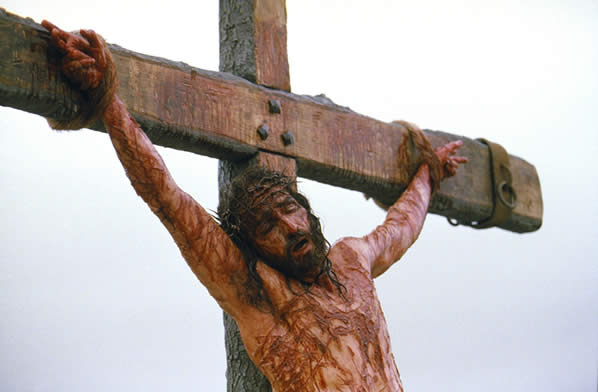
Jesus on the Cross


Many people who find the evidence for a Creator in natural theology compelling have a hard time believing that He could be good. He seems more like a disinterested deity who created and moved on without a backwards glance. As one atheist whose father was dying put it, "If this is the best God can do, he must've taken a half day on Friday."

When he said that, it occurred to me that on a Friday afternoon, God defeated sin, suffering, and death forever on the cross. He finished His work of re-creation and opened up a way that will culminate in a new heaven and a new earth where our humanity is perfected and death and suffering is a thing of the past.

But He also used a powerful symbol to communicate His love for us even when we don't understand why there is so much wrong with the world. God came in human form and took upon Himself our sin and our pain. He died the most shameful and excruciating of deaths, between two criminals. He was present with the lowest of the low, promising Paradise to the repentant sinner (Luke 23:39-43).

From the very beginning, God planned to take responsibility for allowing evil in His creation, by sending His Son to die for us. Contrary to what Christopher Hitchens has said, this is not human sacrifice, something the Bible strictly forbids. It is self-sacrifice by God Himself, the ultimate expression of love and humility.

Thursday, April 21, 2011

The Problem of Evil and Suffering


adamevesuffering.jpg (62469 bytes)
Masaccio's The Expulsion from Paradise

I had a conversation with Lowell in the comments about a month ago where he asked me about a post that I wrote back in 2009: Venite Ad Me Omnes. It was about a crisis I went through eighteen years ago. I wrote it before I had any inkling that I would ever write apologetics, and reading it again through a skeptic's eyes, I wonder if it was irresponsibly written. I spelled out the gut-wrenching evil in great detail, but failed to talk in much detail about God's great goodness through it all. Just about everything I am today grew out of that experience. 

When someone asked me a few days ago why I ended up engaging in dialogue with atheists, I explained that it was because I happened to have a conversation with an agnostic who told me about Atheist Central, and after checking it out I decided to comment. But I realized afterwards that the why goes back much further than that. It started when my five-month-old, Ingrid, had her first seizure the day after I had completed my requirements for graduation from Notre Dame Law School. Before May 12, 1993, Ingrid was developing normally--smiling and babbling to everyone, including stuffed animals and the baby in the mirror. Three months, three hospitals, and countless seizures later, she neither smiled nor cried and her right hand was fisted and unusable. 

That's when I started asking the hard questions.

I've only spent a year-and-a-half thinking about the resurrection evidence, the fine-tuning argument, the cosmological argument, and the argument from moral law, but I spent a decade-and-a-half thinking about the problem of evil--called "the rock of atheism" by German playwright Georg Büchner. I don't claim to have all the answers, but I did gain some insights into the relationship between suffering, spiritual growth, and prayer over the years, and I will do a series of posts on that. 

But I want to stress that the Bible is never overly philosophical about suffering. John 11:35 simply says, "Jesus wept" when He saw people grieving over the death of Lazarus. Jesus wept even though He knew that Lazarus would not remain dead. Evil is still evil and suffering still hurts even though God has reasons for allowing it. We are not to downplay the suffering of others by offering "helpful" platitudes. Instead, we are to "mourn with those who mourn" (Romans 12:15). 

So I don't want to trivialize evil and suffering by a discussion of theodicy. C. S. Lewis said in The Problem of Pain that pain is God's "megaphone to rouse a deaf world." But he later wrote the following in A Grief Observed after his wife died: 
Feeling, and feelings, and feelings. Let me try thinking instead. From the rational point of view, what new factor has H.'s death introduced into the problem of the universe? What grounds has it given me for doubting all that I believe? I knew already that these things, and worse, happened daily. I would have said that I had taken them into account. I had been warned--I had warned myself--not to reckon on worldly happiness. We were even promised sufferings. They were part of the program. We were even told, "Blessed are they that mourn," and I accepted it. I've got nothing that I hadn't bargained for. Of course it is different when the thing happens to oneself, not to others, and in reality, not in imagination.
Pain is also a megaphone that drowns out reason, and it was not until we had settled into our new life with a severely disabled child that I was really able to reflect on the whys. But explanations are a pale substitute for what I did receive during those months in 1993: God's presence, joy, and peace like never before--the fulfillment of the promise of Jesus in Matthew 11:28: "Come to Me, all who are weary and heavy-laden, and I will give you rest."